
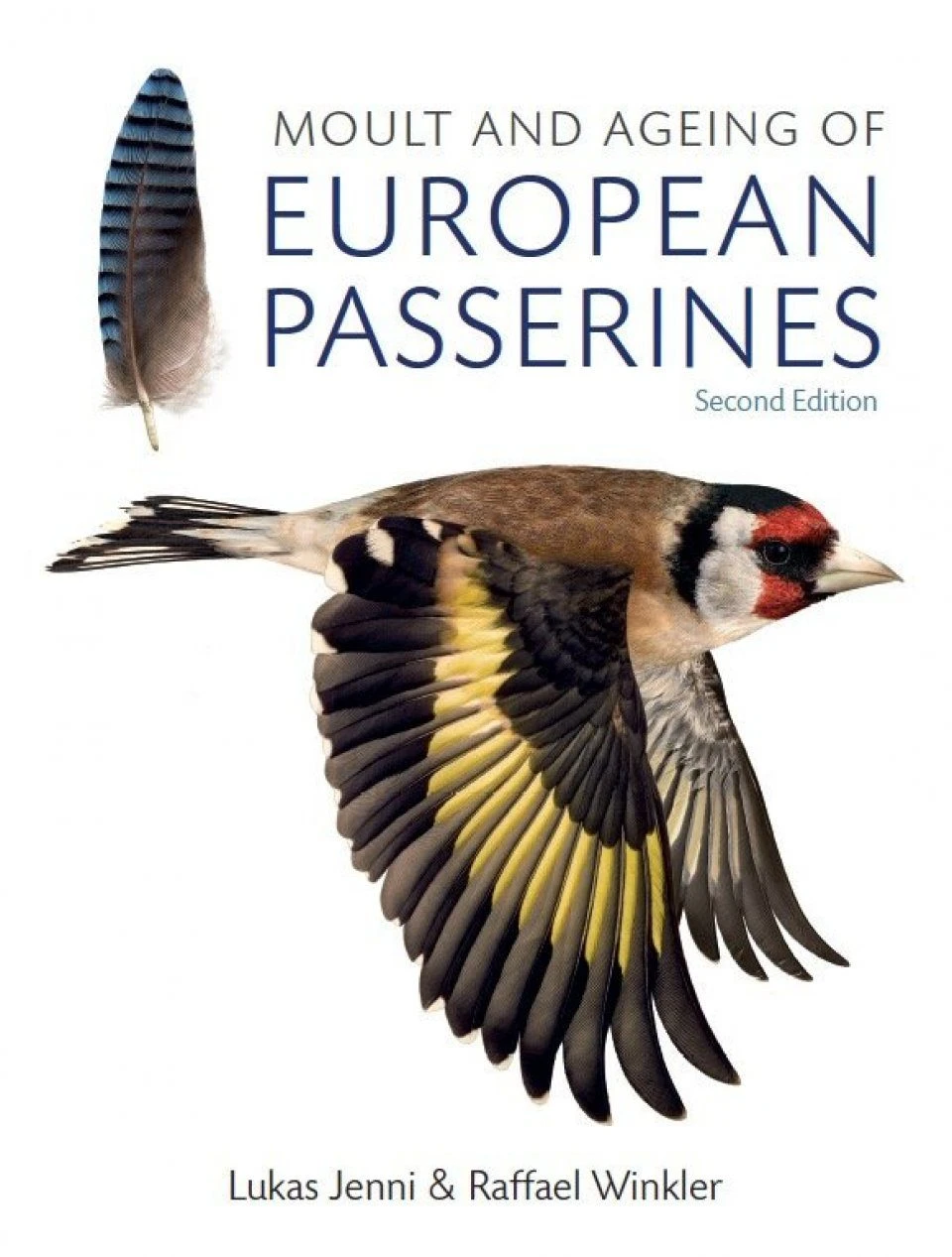


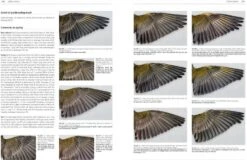

Moult And Ageing Of European Passerines
Original price was: £94.99.£66.49Current price is: £66.49.
- The home of quality products.
- Service that stands out, online and always timely.
- Quality products, fair prices.
- Top Quality Products

About this book
A brand-new, completely revised second edition of Jenni and Winkler’s classic guide, updated and improved for the next generation of ringers and professional ornithologists.
The moult strategies of birds exert an important influence on their behaviour and energetics, and also provide the basis of valuable tools for study. A proper understanding of how feathers are replaced and the precise differences in the appearance of the various feather generations can allow ringers, scientists and keen birdwatchers to age individual birds, and to distinguish between first-year and adult birds. Understanding the moult strategy of a species also provides insights into its general and migration ecology, and allows detailed studies of many aspects of its population dynamics.
Lukas Jenni and Raffael Winkler have studied moult across a wide range of bird species for decades, and in Moult and Ageing of European Passerines bring their observations together to produce a valuable reference for both professional ornithologists and bird ringers. This second edition has been completely updated and revised, with 16 new species accounts added, bringing the total covered to 74.
The first part of Moult and Ageing of European Passerines provides an up-to-date summary of the moult strategies and moult sequences of European passerines, and discusses the ecological consequences of moult. Throughout Moult and Ageing of European Passerines, the authors draw on the enormous amount of data on moult that they have collected over 40 years of study and which, combined with data from the literature, allow them to present a thorough synthesis of the subject.
The second part is of particular value to ringers. Following a general introduction to ageing, detailed moult profiles are given for 74 European passerine species, illustrating all of the major moult strategies and including useful summary statistics, schematic diagrams of the extent of moult and indications of the variation within each species. The main moult strategies are illustrated with schematic graphs, and the moult strategies and extent of moult of every European passerine species are summarised in tabular form.
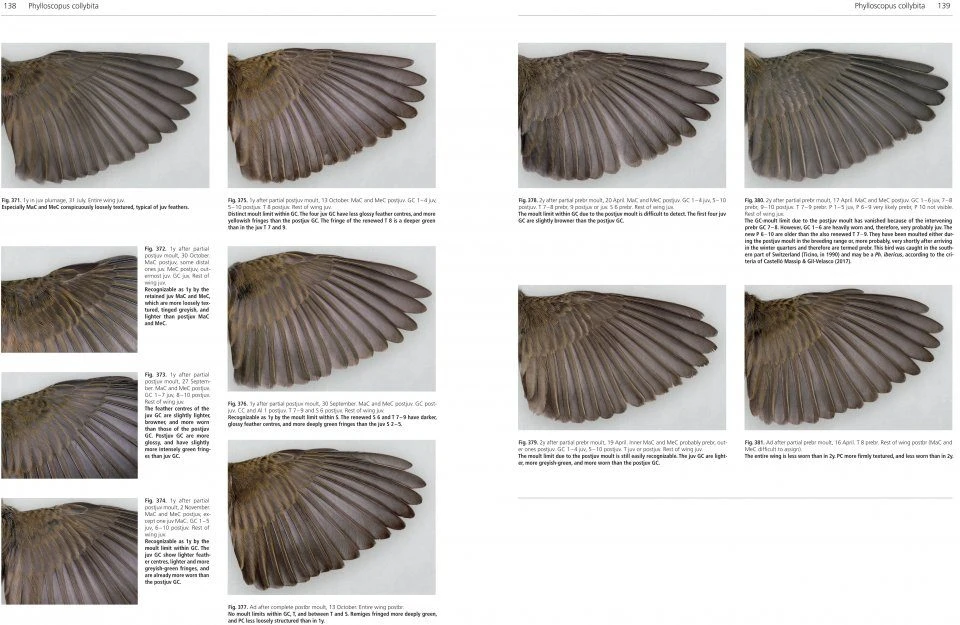
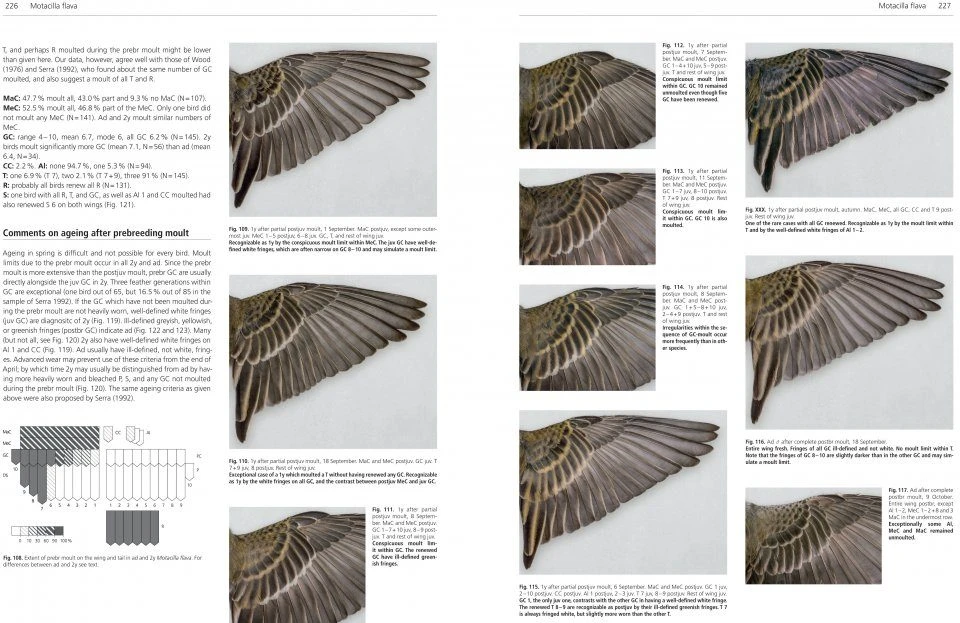
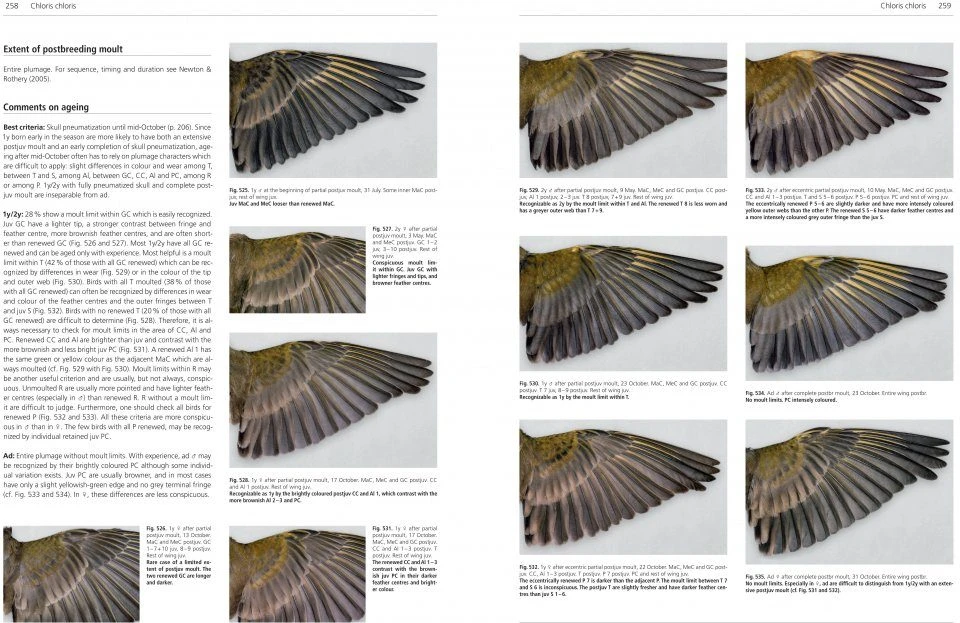
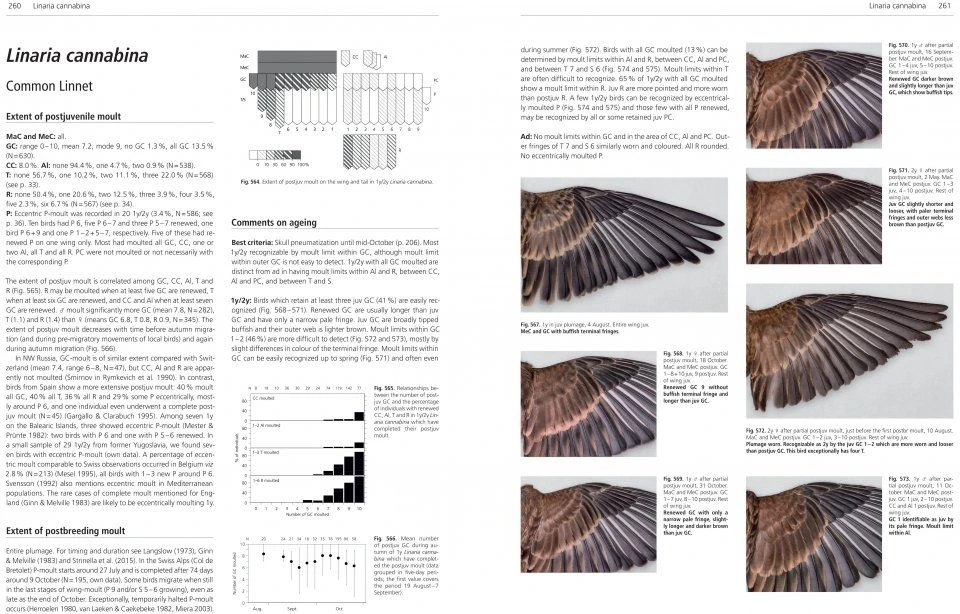
The crowning feature of Moult and Ageing of European Passerines is its collection of more than 600 full-colour photographs of extended wings, which show the entire range of moult patterns and plumage-ageing criteria. An appendix gives supplementary information on ageing birds by the degree of pneumatisation of the skull.
Large in format, packed with high-quality photography and lavish in production specifications, this second edition of Moult and Ageing of European Passerines is both a major reference for ornithologists, zoologists, bird ringers and dedicated birdwatchers, and a work of great scholarship and beauty.
Contents
Preface xi
Part I
Chapter 1. The function and consequences of moult 1
Chapter 2. Terminology and methods in moult research 9
Chapter 3. The moult of adults 25
Chapter 4. The moult during the first year of life 61
Part II
Chapter 5. Ageing European passerines 87
Chapter 6. Species accounts 99
Lanius collurio – Red-backed Shrike 102
Lanius senator – Woodchat Shrike 105
Lanius nubicus – Masked Shrike 108
Oriolus oriolus – Eurasian Golden Oriole 110
Garrulus glandarius – Eurasian Jay 112
Pica pica – Eurasian Magpie 114
Nucifraga caryocatactes – Spotted Nutcracker 116
Corvus corone – Carrion Crow 117
Bombycilla garrulus – Bohemian Waxwing 120
Periparus ater – Coal Tit 122
Cyanistes caeruleus – Eurasian Blue Tit 124
Parus major – Great Tit 126
Riparia riparia – Sand Martin 129
Hirundo rustica – Barn Swallow 130
Delichon urbicum – Common House Martin 131
Phylloscopus trochilus – Willow Warbler 133
Phylloscopus collybita – Common Chittchatt 136
Acrocephalus schoenobaenus – Sedge Warbler 140
Acrocephalus scirpaceus – Eurasian Reed Warbler 142
Acrocephalus palustris – Marsh Warbler 144
Hippolais icterina – Icterine Warbler 146
Locustella naevia – Common Grasshopper Warbler 147
Locustella fluviatilis – River Warbler 150
Sylvia atricapilla – Eurasian Blackcap 152
Sylvia borin – Garden Warbler 156
Sylvia nisoria – Barred Warbler 159
Sylvia curruca – Lesser Whitethroat 162
Sylvia communis – Common Whitethroat 165
Troglodytes troglodytes – Eurasian Wren 172
Sitta europaea – Eurasian Nuthatch 174
Sturnus vulgaris – Common Starling 176
Turdus torquatus – Ring Ouzel 177
Turdus merula – Common Blackbird 179
Turdus pilaris – Fieldtare 182
Turdus iliacus – Redwing 184
Turdus philomelos – Song Thrush 185
Turdus viscivorus – Mistle Thrush 188
Muscicapa striata – Spotted Flycatcher 190
Erithacus rubecula – European Robin 194
Luscinia svecica – Bluethroat 197
Luscinia luscinia – Thrush Nightingale 199
Luscinia megarhynchos – Common Nightingale 200
Ficedula hypoleuca – European Pied Flycatcher 202
Phoenicurus ochruros – Black Redstart 206
Phoenicurus phoenicurus – Common Redstart 209
Saxicola rubetra – Whinchat 212
Oenanthe oenanthe – Northern Wheatear 215
Cinclus cinclus – White-throated Dipper 218
Passer domesticus – House Sparrow 219
Passer montanus – Eurasian Tree Sparrow 221
Prunella modularis – Dunnock 222
Motacilla flava – Western Yellow Wagtail 224
Motacilla cinerea – Grey Wagtail 229
Motacilla alba alba – White Wagtail 232
Anthus campestris – Tawny Pipit 236
Anthus pratensis – Meadow Pipit 239
Anthus trivialis – Tree Pipit 242
Anthus spinoletta – Water Pipit 245
Fringilla coelebs – Common Chaffinch 248
Fringilla montifringilla – Brambling 250
Coccothraustes coccothraustes – Hawfinch 253
Pyrrhula pyrrhula – Eurasian Bullfinch 255
Chloris chloris – European Greenfinch 257
Linaria cannabina – Common Linnet 260
Acanthis cabaret – Lesser Redpoll 263
Loxia curvirostra – Red Crossbill 265
Carduelis carduelis – European Goldfinch 271
Carduelis citrinella – Citril Finch 274
Serinus serinus – European Serin 276
Spinus spinus – Eurasian Siskin 279
Emberiza citrinella – Yellowhammer 283
Emberiza cia – Rock Bunting 285
Emberiza hortulana – Ortolan Bunting 287
Emberiza schoeniclus – Common Reed Bunting 290
Appendix: The use of skull pneumatization for ageing 293
References 301
Scientific names with their English, German, French, Italian and Spanish translations 317
Index 320
Quick reference key 322
Biography
Lukas Jenni was a volunteer at the Swiss Ornithological Institute while studying zoology, botany, geology and chemistry at Basel University. His interest in moult and ageing arose while working with Raffael Winkler. His main research interests are in ecology and the physiology of bird migration, as well as moult biology.
Raffael Winkler graduated with a PhD thesis on the pneumatization of the skull roof in birds. In 1980 he was elected curator of the bird collection at the Natural History Museum, Basel. Since then, he has edited the Avifauna of Switzerland and carried on the Museum’s own tradition in moult research.
| Select | Edition: 2, Hardback, 1, Jan 2020 |
|---|
Be the first to review “Moult And Ageing Of European Passerines”
Related products




![Important Bird Areas In Kazakhstan [Russian]](https://www.academicbookssale.com/wp-content/uploads/2025/09/179082-247x361.webp)


Reviews
There are no reviews yet.